
.svg)

Jaguars of the Pantanal: The Most Unique Jaguars on Earth
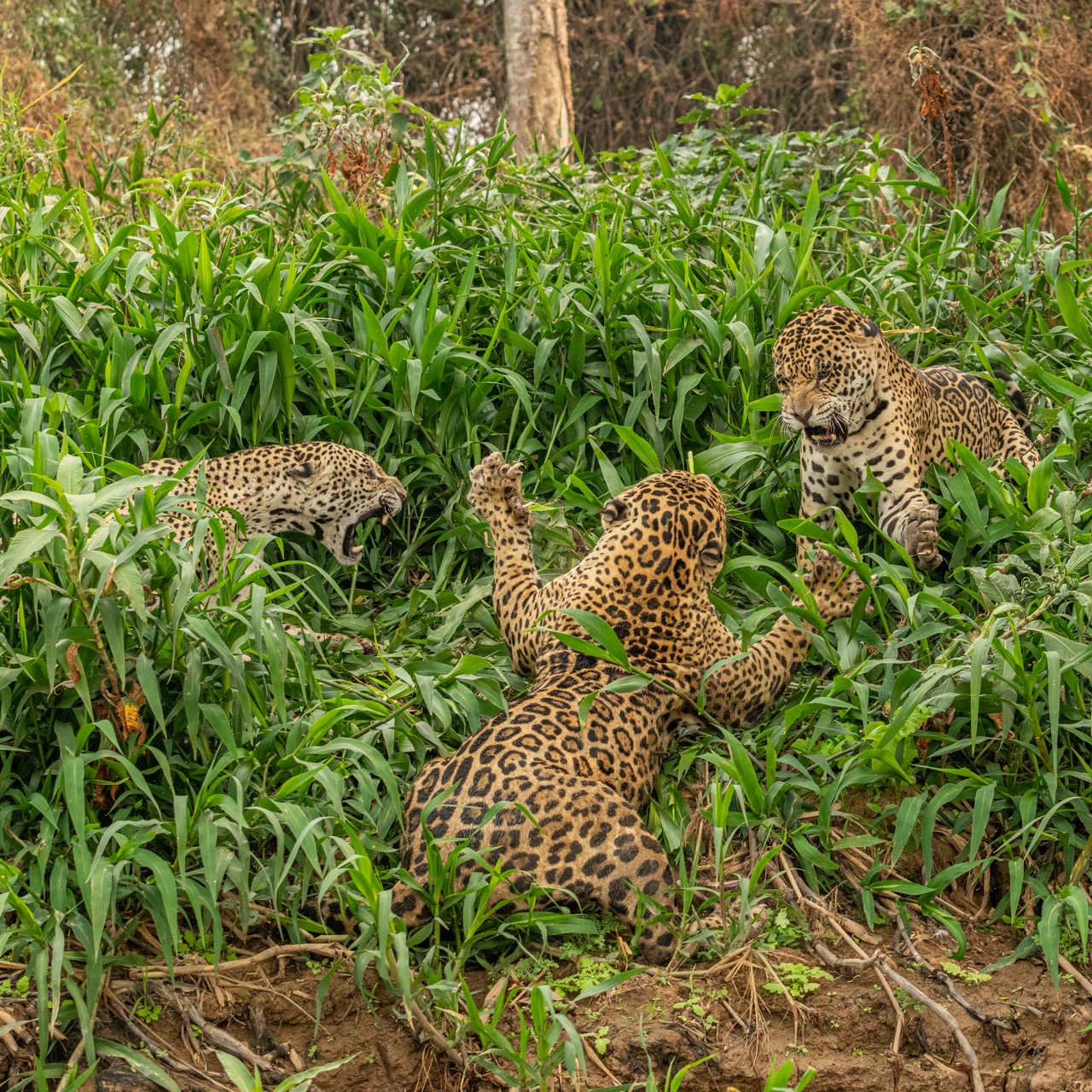
Jaguars of the Pantanal: The Most Unique Jaguars on Earth
Why Pantanal jaguars are larger, bolder, more aquatic, more visible, and more diurnal than any jaguars on the planet.
When most people imagine jaguars, they picture a shadow slipping through dense rainforest — nocturnal, silent, and almost never seen.
That’s true in Central America.
But in the Brazilian Pantanal?
It’s the complete opposite.
Pantanal jaguars are the apex version of the species:
bigger, stronger, more visible, more aquatic, and most uniquely — diurnal.
Compare a Pantanal jaguar to a jaguar from Mexico, Belize, Guatemala, or Colombia, and you’re looking at two animals with completely different ecological strategies.
Same species.
Different universe.
Here’s exactly why Pantanal jaguars are unlike any big cat on Earth.
🐆 1. Pantanal Jaguars Are the Most Diurnal Jaguars on the Planet
Most jaguars across Central America and the Amazon are:
- nocturnal
- elusive
- camera-trap animals
- experts at avoiding humans
Pantanal jaguars flipped the rulebook — for one reason:
Caiman.
Caiman bask in blistering sunlight during the hottest hours of the day to thermoregulate, and this is when they’re most vulnerable.
So Pantanal jaguars evolved to hunt when:
- the sun is brutal
- the heat is oppressive
- the light is harsh
- every other predator on Earth is asleep
You can literally follow a jaguar at 1:00 PM, in 40°C heat, as it stalks, hunts, swims, and patrols the riverbank.
This is NOT normal big cat behavior.
In Africa:
- Lions sleep 20 hours a day.
- Leopards vanish into shadows.
- Cheetahs rest to avoid overheating.
In Central America:
Jaguars rarely move during the day — dense jungle and nocturnal prey force them into night patterns.
In the Pantanal:
Midday = prime hunting time.
This alone makes the Pantanal the best place on Earth to see jaguars.
🐅 2. They Are the Largest Jaguars Ever Recorded
Pantanal jaguars regularly reach:
- 100+ kg
- massive skulls
- deep chests
- thick shoulders
- extreme muscle density
Floodplain abundance has turned them into evolutionary powerlifters.
Their caiman- and capybara-rich diet builds the strongest jaguars in the species’ entire range.
Put a Pantanal male next to a Mexican or Guatemalan jaguar and it looks like:
- heavyweight vs middleweight
- tank vs athlete
- muscle vs mobility
Both magnificent — but fundamentally different.
🐊 3. Pantanal Jaguars Are the Only Jaguars That Specialize in Hunting Caiman
Almost no other jaguar population on Earth:
- hunts crocodilians regularly
- drags them from the water
- kills them head-on
Pantanal jaguars do this weekly.
Caiman can make up 50–70% of their diet in some territories.
This specialization has shaped:
- skull width
- jaw strength
- ambush style
- territory size
- preferred hunting hours
This predator–prey relationship is one of the strongest anywhere on the planet.
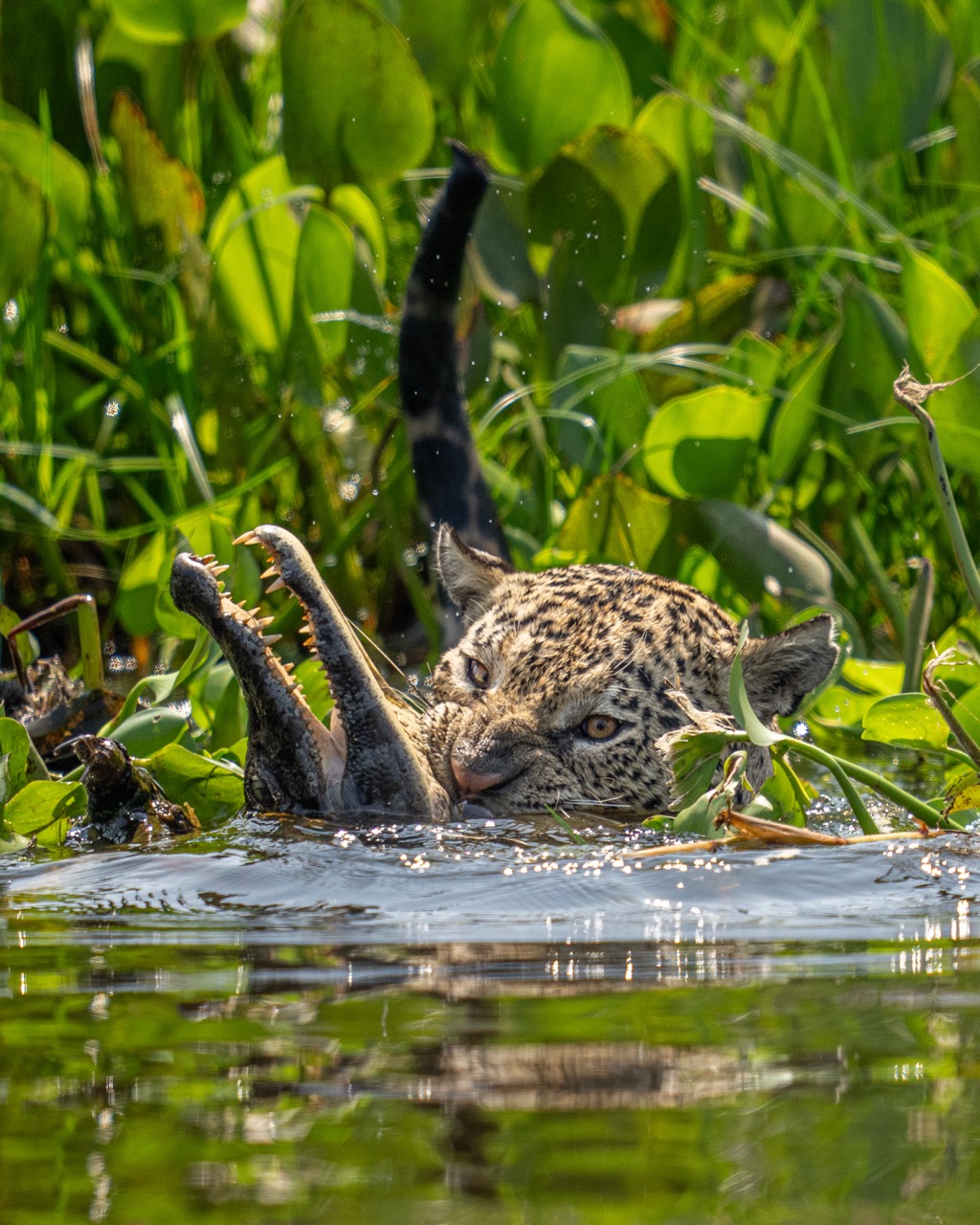
🌊 4. The Most Aquatic Big Cats on Earth
Pantanal jaguars:
- swim constantly
- cross rivers daily
- use tributaries like highways
- stalk from riverbanks
- hunt in water
- drag prey upstream
Water is not an obstacle — it’s their arena.
Drop a jaguar from Mexico into the Pantanal and it wouldn’t survive. It has never learned:
- flood cycles
- river channels
- caiman-hunting techniques
- aquatic ambush strategies
Pantanal jaguars are water-specialists born from a water-world.
🌞 5. Midday Is Prime Jaguar Time — A Behaviour Found Nowhere Else
In Africa?
Everything sleeps.
In Central America?
Jaguars melt into jungle shadows.
In the Pantanal?
Because:
- caiman bask in full sun
- prey is exposed
- riverbanks are open
- water levels drop
- heat drives movement
Here, midday is a wildlife photographer’s dream.
You can spend hours watching a jaguar hunt in blazing sunlight.
This is why people return — again and again — for life.
12 PM – 3 PM = Super Peak Jaguar Hour.
While most boats return to their lodges for lunch, our Journey with Jaguars team stays on the river. Lunch is brought to us so we don’t miss a single moment in the heart of the action.
Want to experience midday jaguar action from the front row?Join our Pantanal Jaguar Photography Expeditions — the only tours designed around true peak hunting hours. 👉 Explore Upcoming Jaguar Safaris
🧬 6. Unique Genetics, Skull Morphology & Muscle Structure
Pantanal jaguars have:
- wider skulls
- tremendous jaw power
- thick, muscular forelimbs
- massive shoulder structures
- distinct genetic clustering
They are biomechanically designed for:
- crushing caiman skulls
- dragging heavy prey through water
- long river patrols
- heat endurance
- swimming across flooded fields
Their bodies reflect their environment.
🧠 7. Behaviour That Feels “Leopard + Tiger + Jaguar” Combined
Pantanal jaguars display a rare blend of behaviours:
- tiger-level swimming
- leopard-style scanning
- classic jaguar crushing power
- semi-tiger hunting patterns
- long-distance patrols
- social tolerance in high-density areas
- visible interactions
- predictable travel routes
They’re a perfect hybrid of power, water mastery, and bold visibility.
🐾 8. Highest Jaguar Density on Earth
More jaguars =
more movement =
more competition =
more hunting =
more sightings.
In Belize or Mexico you may see:
- tracks
- a shadow
- a story
- a lucky camera trap
In the Pantanal, you see:
- hunts
- swims
- mating
- patrols
- stalking
- fights
- cubs learning to kill
This is the only place where you witness the life of a jaguar — not the myth.
⚠️ 9. Jaguars From Other Regions Would Not Survive Here
A Central American jaguar transported to the Pantanal would likely die. It simply doesn’t have:
- aquatic behaviour
- river navigation skills
- caiman hunting knowledge
- heat-adapted physiology
- Pantanal prey-cycle understanding
- the size to compete with local males
- the ability to survive open wetlands
- flood-season navigation instincts
Jaguars are hyper-local specialists.
Pantanal jaguars are specialists in water, heat, and vast open floodplains.
📸 10. The Best Jaguars on Earth for Photography
Pantanal jaguars are:
- diurnal
- active all day
- aquatic
- bold
- huge
- visible
- predictable
- comfortable around boats
This is the jaguar capital of the world — and the ultimate destination for wildlife photographers.
🌿 Final Thought: The Pinnacle of Jaguar Evolution
Pantanal jaguars are:
- the largest
- the strongest
- the most aquatic
- the most diurnal
- the most visible
- the best hunters
- the most reliable for photography
- the most ecologically unique
They are not just different —
they are the apex expression of the species.
And this is why Journey With Jaguars is becoming the global source for jaguar knowledge, conservation storytelling, and world-class jaguar expeditions.
🐆 Want to See Pantanal Jaguars in the Wild?
Travel with us deep into the heart of the world’s most extraordinary jaguar population.
👉 Explore Jaguar Photography Expeditions
Elite guides • Fast boats • Diurnal hunting • Real wilderness encounters
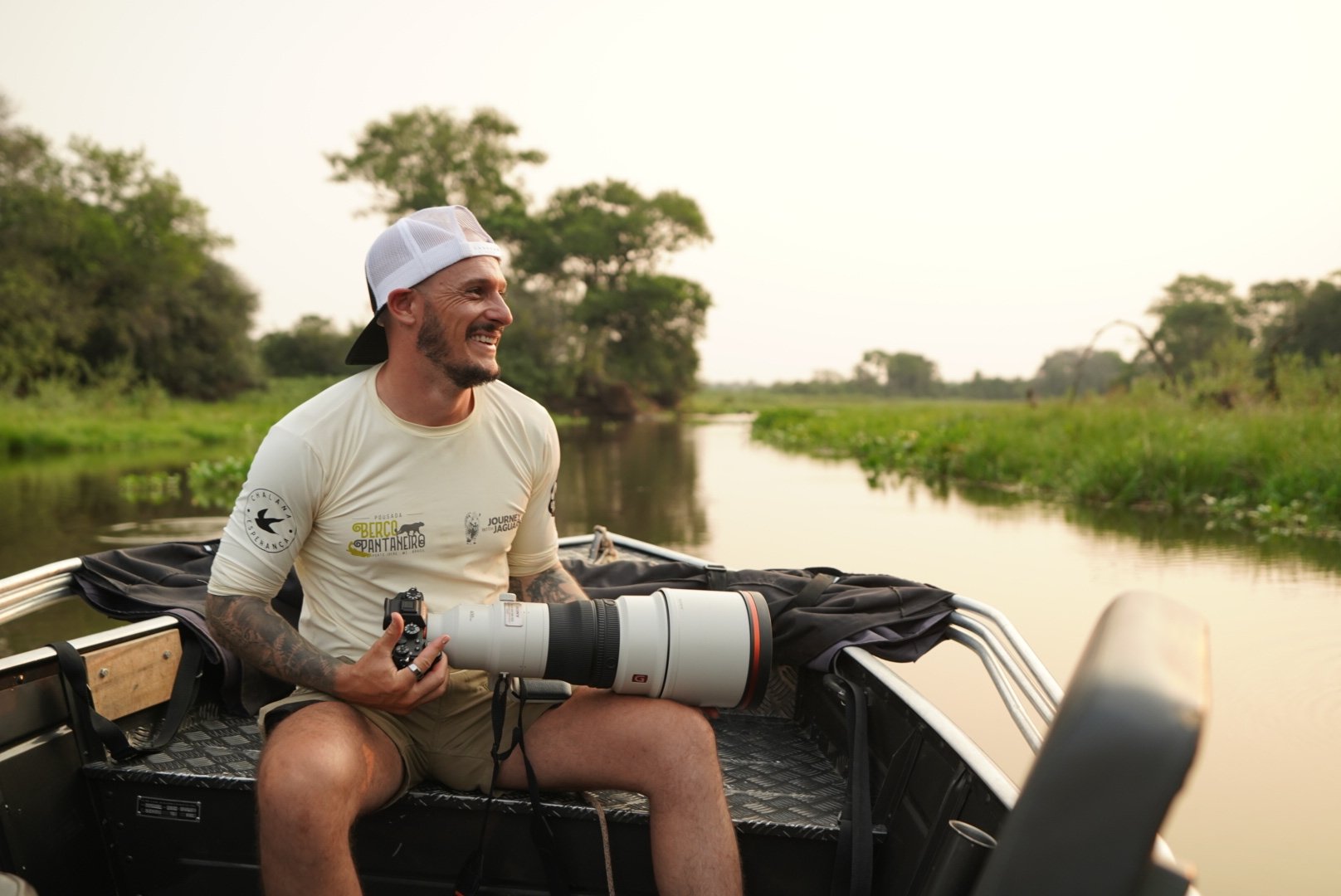
Ex-Professional Jockey | Founder @ Journey with Jaguars | Jaguar Safaris, Brazilian Pantanal | Wildlife Photographer | Director @ CLIC Foundation
.png)
Step into the wild
Exclusive trip updates, rare jaguar stories, and insider photography tips - straight to your inbox!