
.svg)

21 Pantanal Jaguar Facts
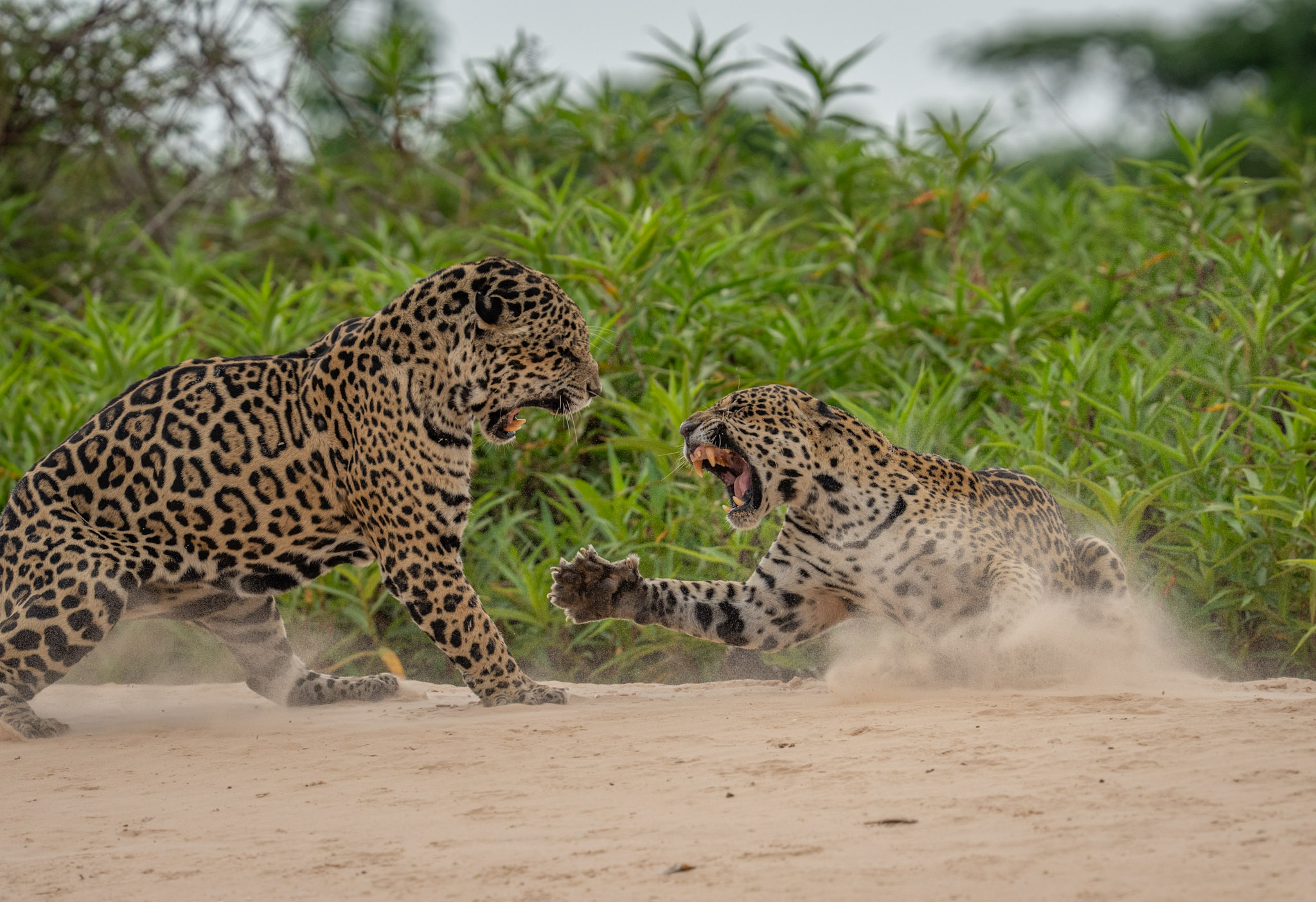
Pantanal Jaguar Facts: 21 Wild, Rare, and Mind-Blowing Things You Never Knew About Jaguars
Most people know jaguars are powerful.
But the truth?
They’re far stranger, more complex, and more extreme than anyone imagines.
Here are the most interesting, wild, and scientifically accurate jaguar facts — curated by Journey with Jaguars, the world’s leading source of Pantanal jaguar expertise.
→ Join a Jaguar Safari with Journey with Jaguars
1. Jaguars have the strongest bite of any big cat — pound for pound
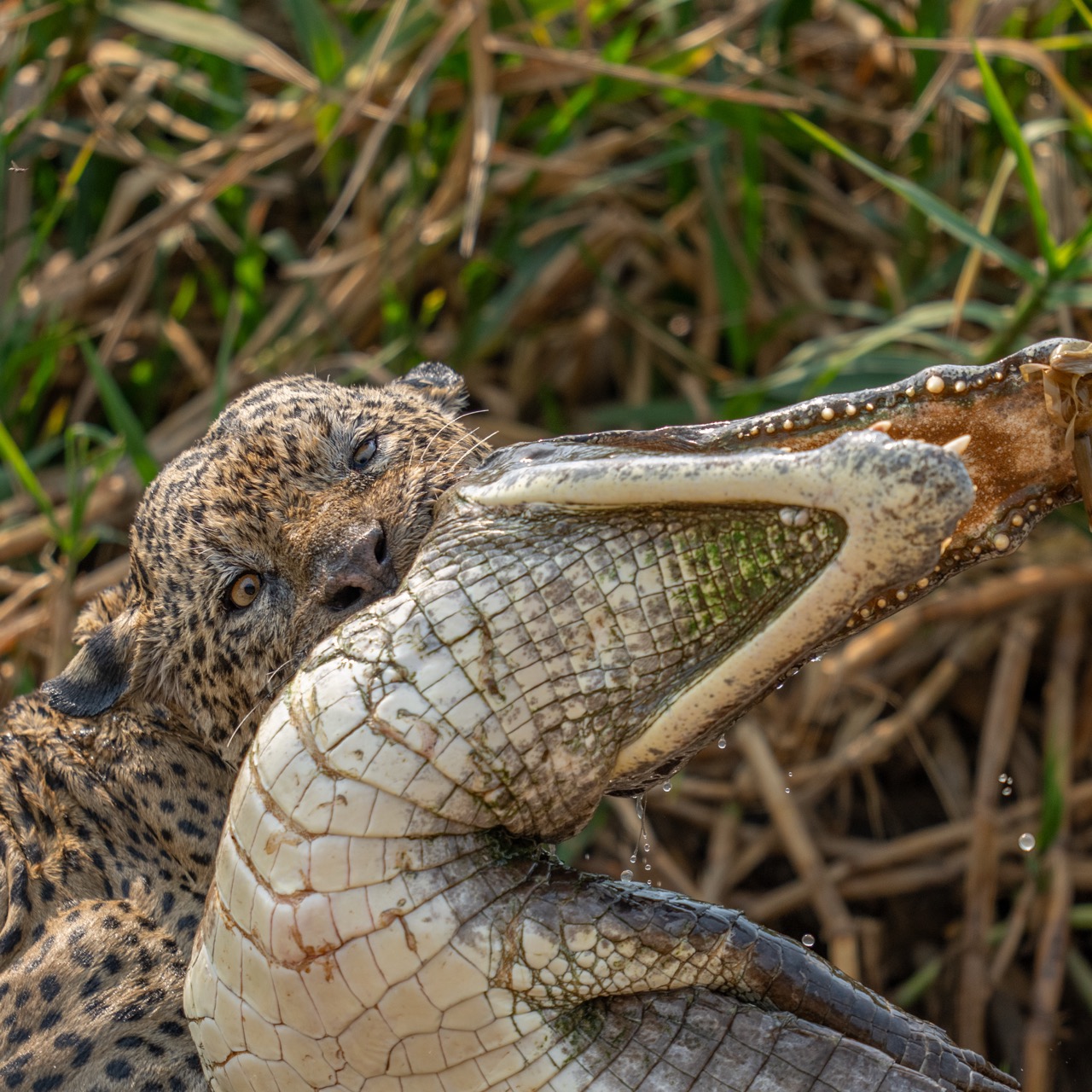
They bite with 1,500+ PSI, strong enough to puncture skulls, crush turtle shells, and kill caiman by driving their canines straight through the brain.
No other big cat kills like this.
2. Females can mate up to 100 times a day
Yes, really.
A female in estrus may mate every 10 minutes, with multiple males, over several days.
It’s the jaguar version of survival insurance.
3. Pantanal jaguars are the most aquatic jaguars on Earth
Most jaguars are forest animals.
Pantanal jaguars?
They’ll swim rivers, hunt from the water, patrol banks, cross channels, and even chase prey through floating vegetation.
They’re semi-aquatic apex predators.
4. They’re the only big cat that routinely kills caiman
Tigers take down crocodiles occasionally.
Lions almost never.
Leopards? Rarely.
Jaguars do it weekly in the Pantanal.
5. Pantanal jaguars are the most diurnal jaguars in the world
In Central America, jaguars are ghosts — shy, nocturnal, almost never seen.
In the Pantanal?
They hunt all day, even in the hottest hours.
Why?
Because caiman thermoregulate in full sun, giving jaguars peak hunting windows between 12 PM and 3 PM.
This is why Journey with Jaguars stays out when everyone else goes back for lunch.
→ What to Expect on One of Our Jaguar Safaris
6. Jaguars kill with precision, not speed
Instead of suffocating prey like lions, jaguars go for:
- the skull
- the spine
- the brain stem
One bite. Lights out.
7. Jaguars are incredibly tolerant of boats and humans — in the Pantanal
Thanks to a long history of non-hunting and river-based tourism, Pantanal jaguars show near-zero fear of boats, allowing the world’s best photographic opportunities.
In contrast, jaguars in Mexico or Belize disappear instantly at human scent.
Same species. Different planet.
8. Jaguars purr like domestic cats
But they don’t roar like lions.
They grunt, growl, chuff, and make a deep, throaty call known as a sawing vocalization.
9. Their name comes from the Indigenous word “yaguará”
Meaning:
“Beast that kills with one leap.”
Accurate.
10. Melanistic jaguars (black jaguars) still have spots
Under IR light or in the right angle, their rosettes are visible.
Their melanism gene is dominant, unlike leopards where it’s recessive.
11. Jaguars have the densest population in the Pantanal
No place on Earth has more jaguars per km².
This is why sightings are so reliable — it’s the jaguar capital of the world.
12. They don’t drag kills into trees like leopards
They don’t need to.
No hyenas. No lions.
No competition strong enough to steal from them.
13. Jaguars are the only big cat in the Americas
They once ranged from the USA to Argentina.
Today, their stronghold is Brazil — specifically the Pantanal and Amazon.
14. A jaguar’s rosettes are completely unique
No two patterns are identical.
Each jaguar is essentially fingerprinted by its coat.
This is how researchers and guides ID individuals.
15. Jaguars can hold their breath longer than you think
They’re powerful divers and can stay submerged for over a minute, hunting fish, caiman, and even grabbing prey from underwater ambushes.
16. Jaguars are naturally solitary — but Pantanal mothers break the rules
Pantanal cubs may stay with their mothers for up to two years, learning:
- river navigation
- caiman hunting
- territorial boundaries
- jaguar body language
- fishing techniques
It’s a long apprenticeship.
17. They mark territory using “scrapes”
They use back feet to make leaf-scratches on the ground.
It’s the Pantanal’s secret jaguar communication network.
18. Pantanal jaguars are larger than any other jaguar population
Males often reach 100–130kg, with some giants hitting 140+ kg.
Over the last three years, Journey with Jaguars has photographed multiple 140+ kg males.
19. Jaguars don’t stalk like lions — they ambush like crocodiles
Silent.
Low.
Close-range.
Brutally fast.
They end hunts in seconds, not minutes.
20. Their jaws are designed for armor-crushing prey
Turtles.
Armadillos.
Caiman.
This diet is what shaped the jaguar’s legendary bite force.
21. Jaguars see exceptionally well in low light
They have a reflective eye layer (tapetum lucidum), like all big cats, but jaguars excel at dusk ambushes and riverbank shadows, giving them a huge hunting advantage.

Ex-Professional Jockey | Founder @ Journey with Jaguars | Jaguar Safaris, Brazilian Pantanal | Wildlife Photographer | Director @ CLIC Foundation
.png)
Step into the wild
Exclusive trip updates, rare jaguar stories, and insider photography tips - straight to your inbox!